
Shane Flaherty
Economics Student
SBS 370: Toward A Global Ethics // Analytic Methods & Practical Skills III
March 25th, 2026
Introduction:
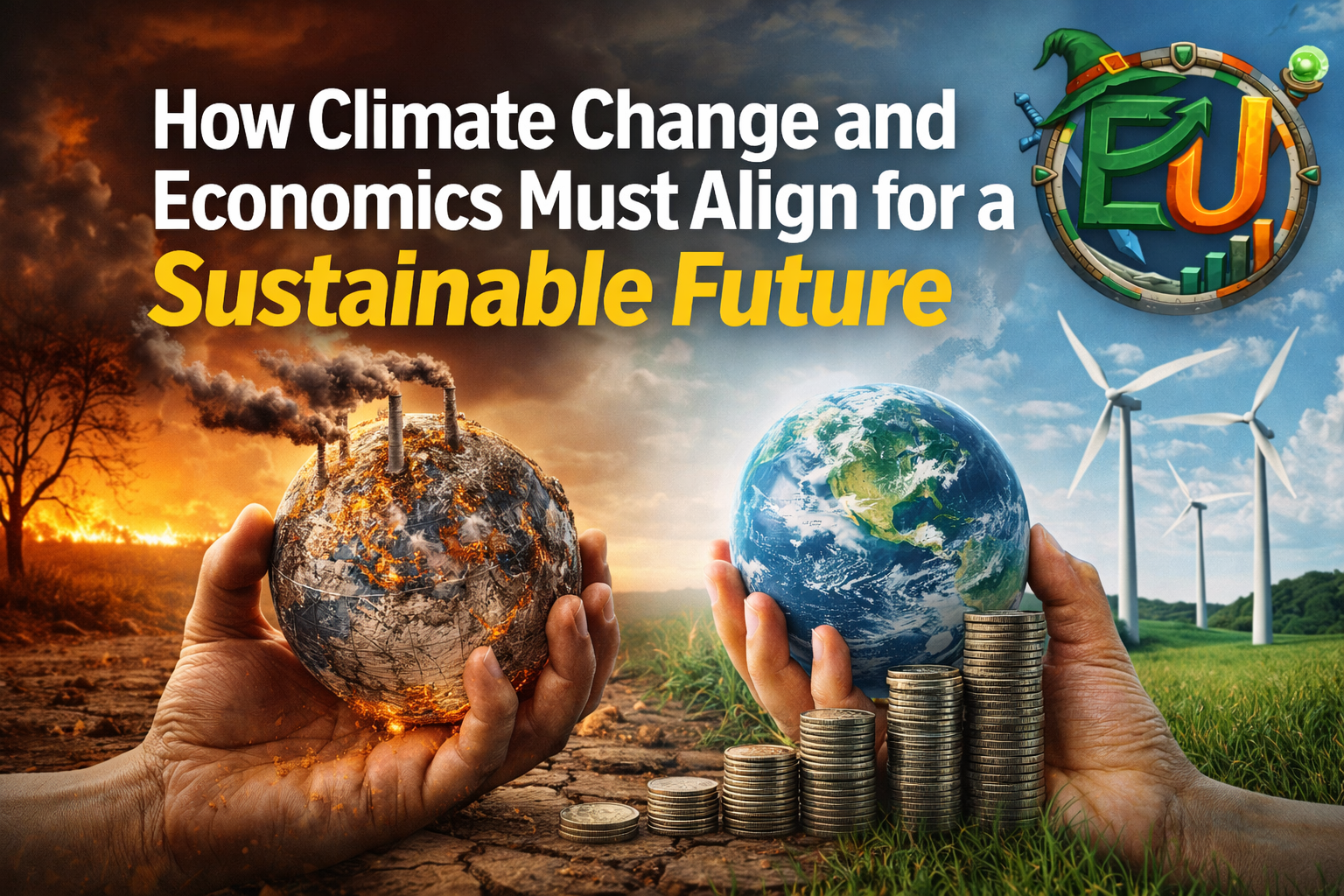
Environmental ethics provides a philosophical framework for understanding humanity’s moral relationship with the natural world. The rampant escalation of global warming and climate change have led these fields to be increasingly intertwined with environmental economics, which examines how economic systems impact ecological sustainability. Together, these disciplines offer both moral guidance and practical tools for navigating today’s environmental challenges. Traditionally, western ethics were largely anthropocentric, meaning they prioritized human interest above all else. Under this framework, nature was viewed as a resource to be exploited for human benefit. However, understanding the current state of the environment and the economic systems that have caused such drastic impacts, we can clearly see that ethical responsibility and economic decision making must align to ensure we head towards a sustainable future. These current circumstances affirm Aldo Leopold’s ecocentric perspective, which states that nature has an intrinsic value separate from the utility provided to man, as a necessary condition for the continued survivability and sustainability of both human society and the biosphere at large.
Macro analysis:
Environmental ethics plays a crucial role in shaping how society understands and responds to global warming and climate change. These phenomena are driven largely by industrial activity such as energy production, agribusiness, manufacturing and construction, and transportation, which combined account for over 80% of all greenhouse gas emissions. This substantial excess of greenhouse gas emitted into the air present not only scientific and economic challenges but also profound ethical dilemmas. Climate change introduces questions of fairness and responsibility when looked at through an ethical lens. Historically, developed nations contributed to climate change far more than other countries via industrial practices. Despite this, developing nations often bear the worst burden of environmental impacts such as rising sea levels, extreme weather events, and food insecurity. This imbalance signifies the global issues of justice and equity.
Environmental economics utilizes tools such as Jeremy Bentham’s cost benefit analysis to evaluate climate policies, but this tool can fall short when ethical considerations are introduced in an economic capacity. For example, placing a monetary value on biodiversity loss or human displacement obscures the moral significance of such outcomes. Environmental ethics correctly insists that not all values can or should be reduced to economics terms. Lastly, the economic concept of discounting, where future costs and benefits are valued less than present ones, comes under scrutiny when analyzed with an environmental ethics lens. From an ethical perspective, heavily discounting the future undermines the principle of intergenerational justice by effectively prioritizing consumption over the wellbeing of future generations and the planet.
Micro analysis
Environmental ethics and the associated awareness helps shape how individuals make everyday consumption decisions, particularly when such decisions carry environmental impacts that are not immediately visible. One such example is the consumption of ultra processed foods which are widely available, inexpensive, addictive, and heavily marketed, yet are extremely environmentally costly. From an environmental economics standpoint, ultra processed foods are typically cheaper because their market prices fail to account for their full environmental costs. These products heavily rely on industrial agriculture, intensive resource use (such as 50 trillion gallons of water a year), and extensive packing and supply chains, all these factors contribute heavily to greenhouse gas emissions, energy consumption, and waste generation. All these harms are examples of what economists call negative externalities, meaning the true cost is not borne by the consumer or producer, but instead by society at large and especially by underdeveloped nations. It is worth mentioning however that American citizens do bear some of the cost by subsidizing crops and making it possible for producers to obtain the raw materials so cheaply. Environmental ethics ties a moral dimension into the ultra processed food economic reality. While a consumer may choose to purchase ultra processed foods due to convenience, affordability, or accessibility, ethical frameworks encourage individuals to consider the broader consequences of their choices. Due to this, the monocropping, deforestation, and high fossil fuel inputs that make ultra processed foods possible pose ethical dilemmas for ecocentric and sustainably oriented perspectives. When applying environmental ethics to our food purchasing decisions, we may instead choose to purchase minimally processed or locally sourced foods, even if these options carry a higher price tag or greater effort. Implementing such practices reflects a willingness to internalize environmental costs that the market overlooks. In doing so, the individual moves beyond the typical economic theorized behavior of purely self-interested behavior and instead becomes a bastion for a more responsibility-oriented approach that accounts for environmental sustainability.
Lastly, it must be addressed that the example of ultra processed foods relies heavily on constraints such as income, time, and geographic location for access to local supply chains. A majority of ultra processed foods are consumed by the impoverished, so it’s important to note that not all individuals have equal opportunity to make environmentally optimal choices. This raises further ethical considerations about fairness and systematic inequality. Such circumstances allow environmental ethics, economics, and policy to intersect with individual behavior and structural changes to help align individual incentives with ethical outcomes, such as subsidies for sustainable agriculture or improving access to healthy foods. In this way, exploring the example of ultra processed food illustrates how environmental ethics operates in everyday life. It encourages individuals to critically evaluate their consumption habits, recognize the hidden environmental costs embedded in market prices, and make choices that better align with long term ecological sustainability.
Conclusion
When examined alongside one another, environmental ethics and economics reveal that the environmental problems we face are not solely technical or financial but instead are fundamentally moral ones. Issues such as global warming and climate change expose deep inequalities in responsibility and consequences, while also challenging the adequacy of economic tools such as cost benefit analysis and discounting. Although these economic tools are useful in the right context, they often fail to capture the full moral weight of environmental degradation, particularly when it comes to intergenerational justice and the intrinsic value of the natural world. These same moral shortcomings manifest in the inevitable choices of everyday life, with ultra processed foods serving as the example of how individual consumption choices are embedded within larger systems of production, externalities, and inequality. Despite economic incentives often encouraging convenience and affordability, environmental ethics counters with a need for a broader awareness of the hidden ecological and social costs associated with such choices. It’s important to reiterate structural inequalities also exist in areas such as access, income, and infrastructure and these inequalities consistently undermine people’s ability to eat healthy foods or make environmentally sustainable choices. The shortcomings associated with these inequalities highlight the need for policy interventions that align economic systems with ethical imperatives. By utilizing environmental ethics and environmental economics in tandem, we possess not only the capacity to better guide individual behavior, but to reshape the systems that constrain and influence it. Ultimately, these disciplines working together point towards a more comprehensive understanding of sustainability, one where efficiency is balanced with equity, and practicality with principle. As environmental distress continues to intensify, it becomes increasingly clear that true change requires both systemic transformation as well as individual accountability. Therefore, even routine dietary choices become ethically significant, reflecting the broader tension between economic convenience and environmental responsibility.
Thank you for reading this post in my blog! Please feel free to connect with me at any of the locations below or subscribe for email notifications. Lets continue to make the world a better place, one conversation at a time!
YouTube: https://www.youtube.com/@Econ_Unpacked
Discord: https://discord.gg/ejNAVwTtp7
Contact email: econunpackedinquiry@gmail.com
Works Cited
Coulson, M. (2025, November 10). What are ultra-processed foods? | johns hopkins | Bloomberg School of Public Health. John Hopkins University Public Health. https://publichealth.jhu.edu/2025/what-are-ultra-processed-foods
Dereniowska, M. (2019, June). Do We Need Environmental Ethics?. World Economics Association. https://www.worldeconomicsassociation.org/newsletterarticles/environmental-ethics/
Monteiro, C. A., Cannon, G., Levy, R. B., Moubarac, J.-C., Louzada, M. L., Rauber, F., Khandpur, N., Cediel, G., Neri, D., Martinez-Steele, E., Baraldi, L. G., & Jaime, P. C. (2019, April). Ultra-processed foods: What they are and how to identify them. Public health nutrition. https://pmc.ncbi.nlm.nih.gov/articles/PMC10260459/
USGCRP. (n.d.). Fifth national climate assessment. U.S. Global Change Research Program.
Leave a Reply